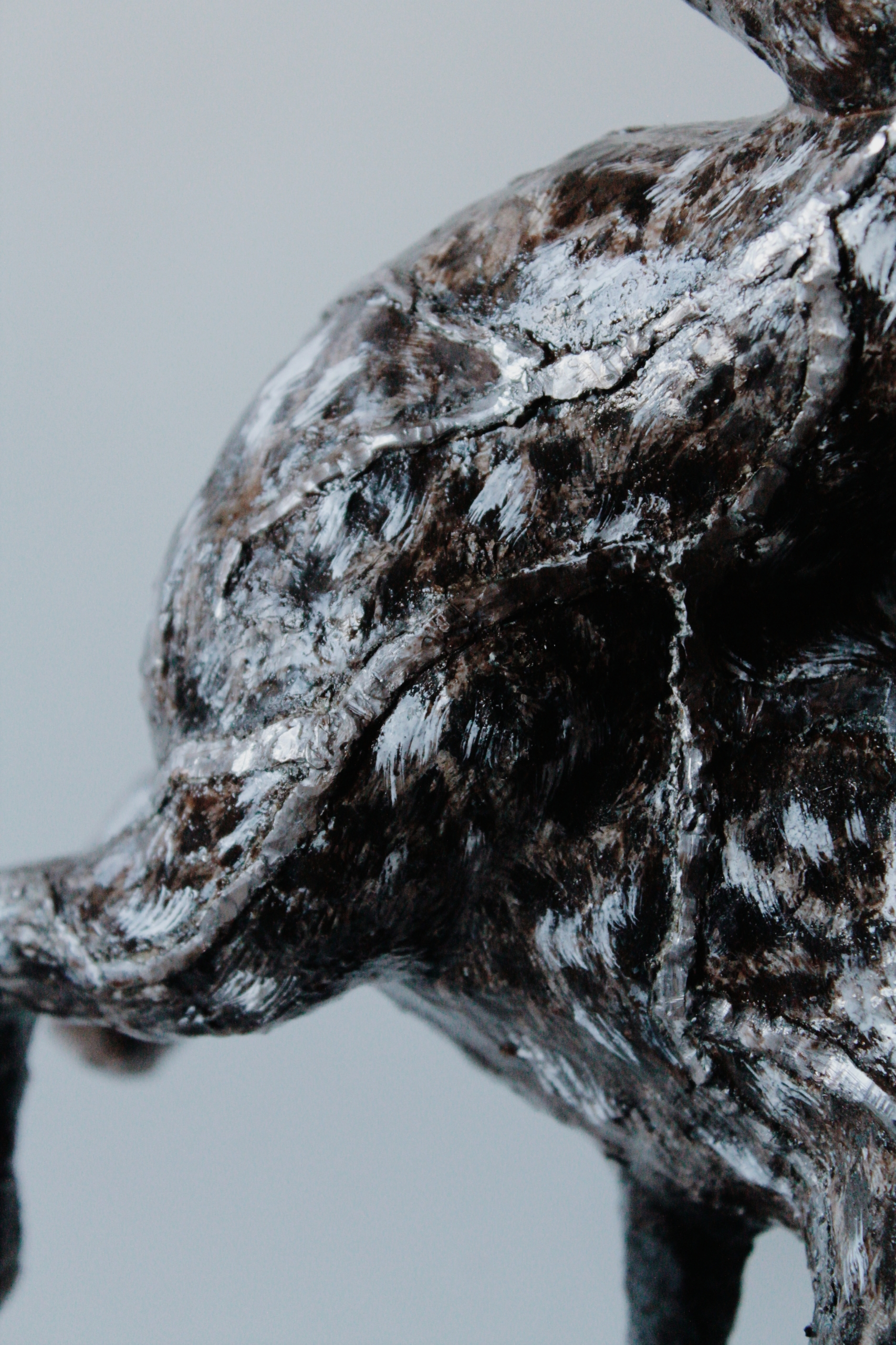
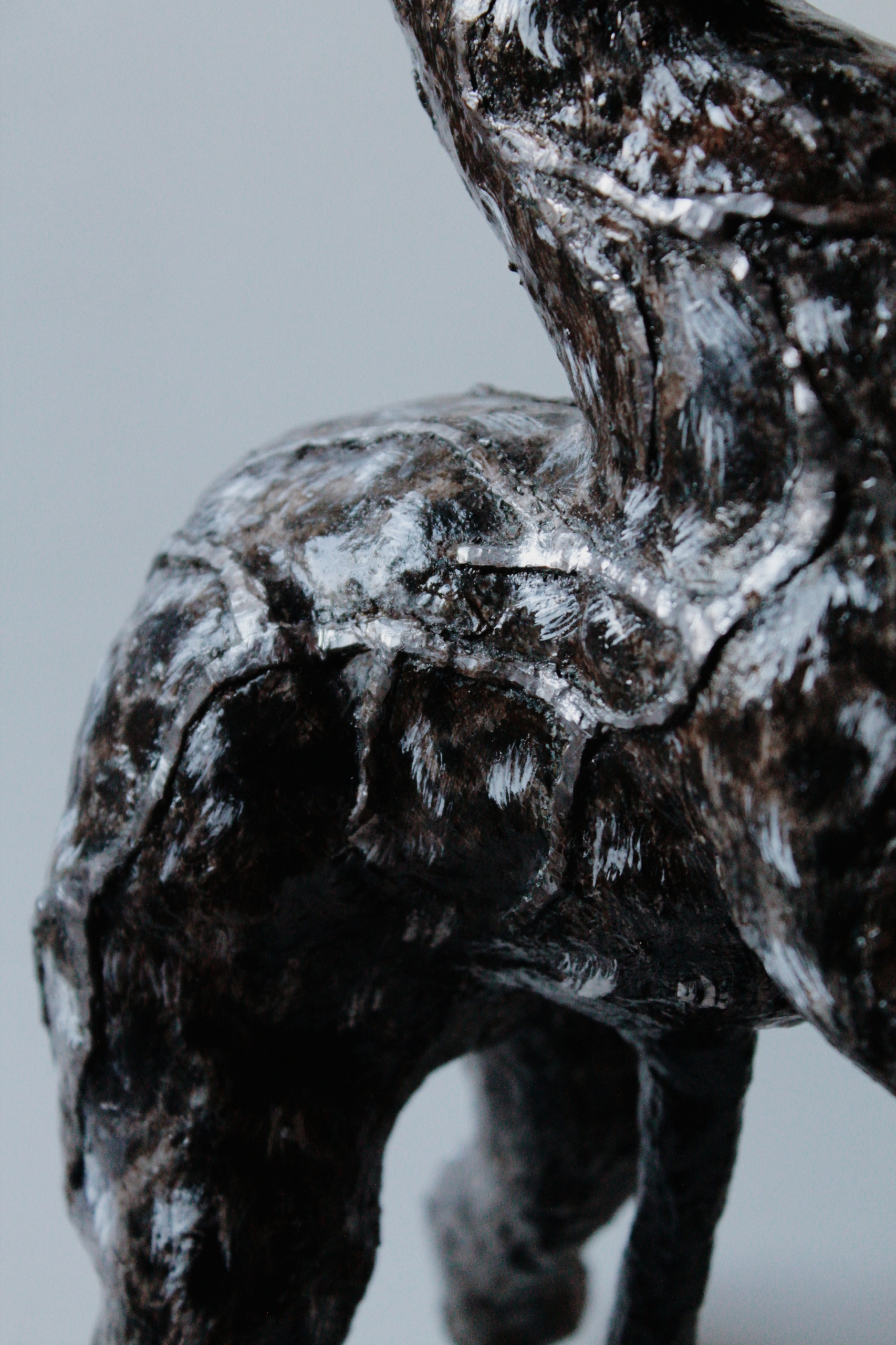
Scapegoat, 2026
paper pulp, metal sculpture
30 × 18 cm
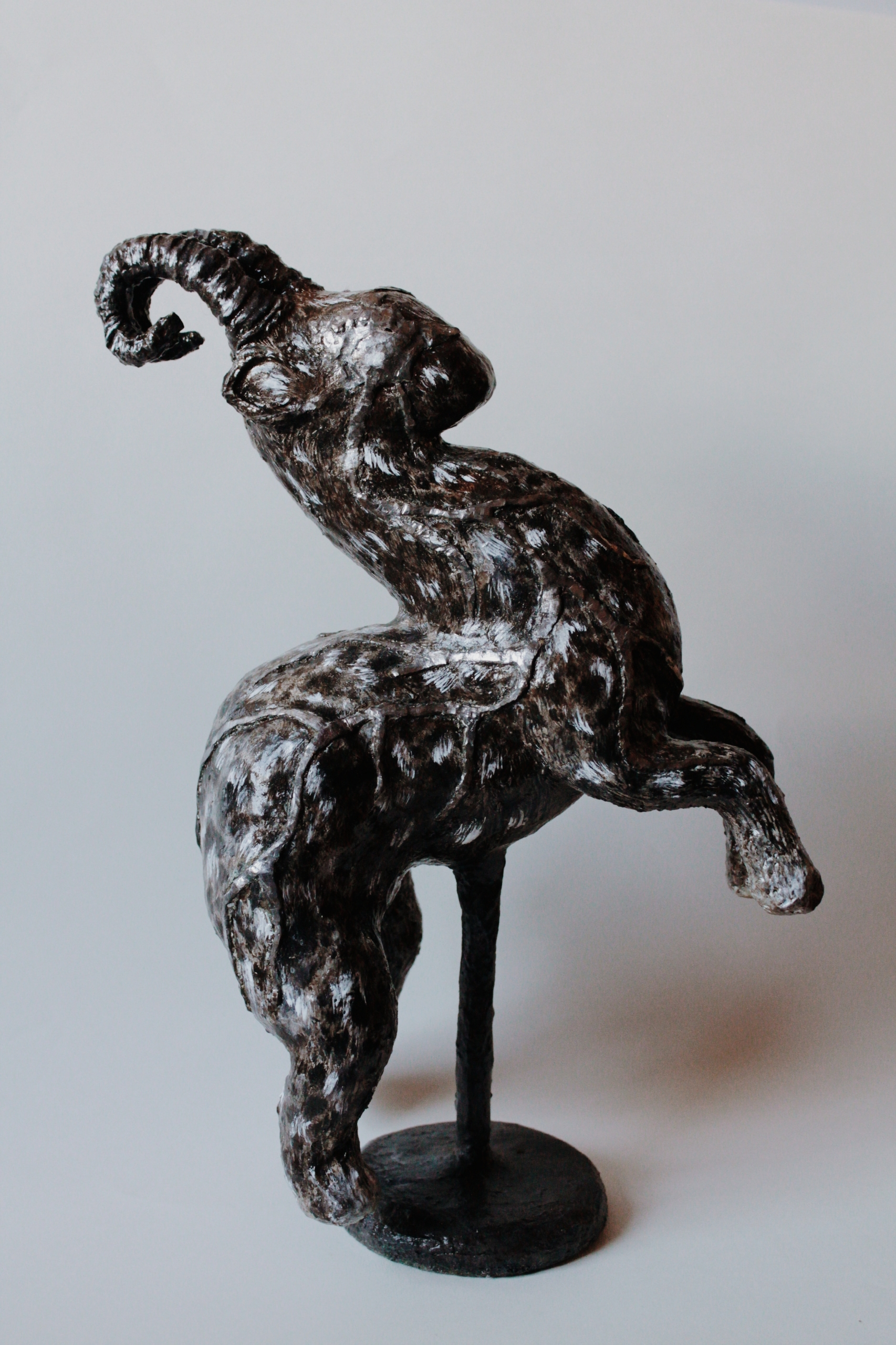
The term "scapegoat" originates from a biblical ritual in Leviticus 16 (Day of Atonement), where one goat was sacrificed and another had the community's sins symbolically placed upon it’s Head before being driven into the wilderness.
The ancient Hebrew practice involved two goats. One was for Yahweh (to be sacrificed), and the other was for "Azazel," which was sent away into the desert after sins have been placed upon its head, carrying the sins away from the sinners.